Kraków Barbican, St Florian's Gate and the city walls
The Kraków Barbican is the round outwork of 1498–1499 in front of St Florian's Gate, on the north side of the Old Town. Beside the gate about 200 m of the medieval city wall survive whole, with three towers. One paid ticket covers the Barbican and the walls, which open to visitors from May to October.
Updated
Key facts
- Entry
- Paid, PLN 22One ticket for both, no free day
- Season
- May to OctoberTuesday to Sunday, closed on Mondays
- Hours
- 10:30 to 18:00Last entry 30 min before closing
- Time needed
- About 60 minA guided visit of both
- Built
- 1498–1499The gate is first mentioned in 1307
- From the Main Square
- 8 min on footSt Florian's Gate 7 min on foot
What stands of the fortifications
The Barbican stands in Planty Park, 60 m in front of St Florian's Gate. Of the medieval walls that once ringed the town, one stretch survives whole: about 200 m of wall with the gate and three towers beside it, the Haberdashers', the Joiners' and the Carpenters' towers.
Between the last two stands the city Arsenal of 1565–1566. The Barbican is entered from Basztowa and the walls from Pijarska, on the town side.
- Kraków BarbicanThe round outwork, entered from Basztowa
- St Florian’s GateThe gate tower at the north end of Floriańska
- City wallsThe walls’ entrance on Pijarska
- Haberdashers’ TowerBaszta Pasamoników, at the Szpitalna end of the wall
- Joiners’ TowerBaszta Stolarska, west of the gate
- Carpenters’ TowerBaszta Ciesielska, by Sławkowska
- ArsenalThe city Arsenal on Pijarska, a branch of the National Museum
Visiting the Barbican and the walls
Barbican and city walls
- Ticket
- PLN 22
- Reduced PLN 16
- Season
- May to October
- Tuesday to Sunday, 10:30 to 18:00
- Last entry
- 30 min before closing
- Entrances
- Basztowa and Pijarska
- The Barbican, then the walls
The Barbican and the city walls are two branches of the Museum of Kraków with one joint ticket. A ticket for one lets you see the other within three days of the date on it, on the days both are open. There is no free day.
Both open for a season, from May to October, Tuesday to Sunday from 10:30 to 18:00, and are closed outside it. The last entry is 30 minutes before closing.
A guided visit of both takes about 60 minutes. On the walls the route goes inside the Haberdashers' Tower, over 31 m high. The ground round the Barbican is cobbled and very uneven.
7 min walk
St Florian’s Gate
510 mAt the north end of Floriańska
7 min walk
Arsenal
480 mOn Pijarska, by the walls
8 min walk
Kraków Barbican
570 mThe entrance on Basztowa
8 min walk
City walls
580 mThe entrance on Pijarska
The Barbican
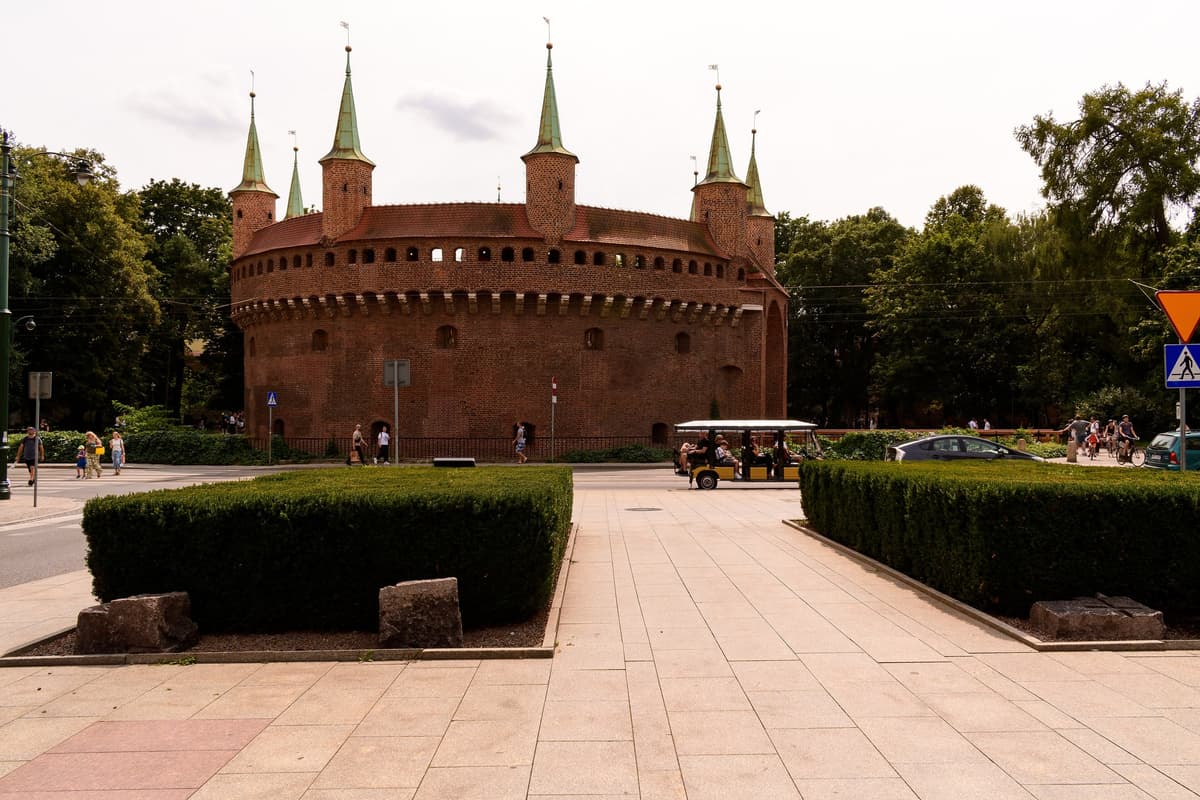
A barbican is an outwork that guards the way to a gate or a bridge of a town or a castle. Kraków's was built in 1498–1499, against the threat of Wallachian, Turkish and Tatar raids after the failed campaign of King Jan Olbracht in 1497.
It is built on the plan of an incomplete circle, 24.4 m across inside its walls and over 30 m outside. A moat 26 m wide and up to 6 m deep once ran round it, and a neck joined it to the gate.
Its walls have 130 loopholes for hand-held firearms, on four levels set out like a chessboard, and seven watch turrets, round and eight-sided in turn, crown it. From 1566 its main task was to guard the way to the city Arsenal.
St Florian’s Gate and the Royal Road
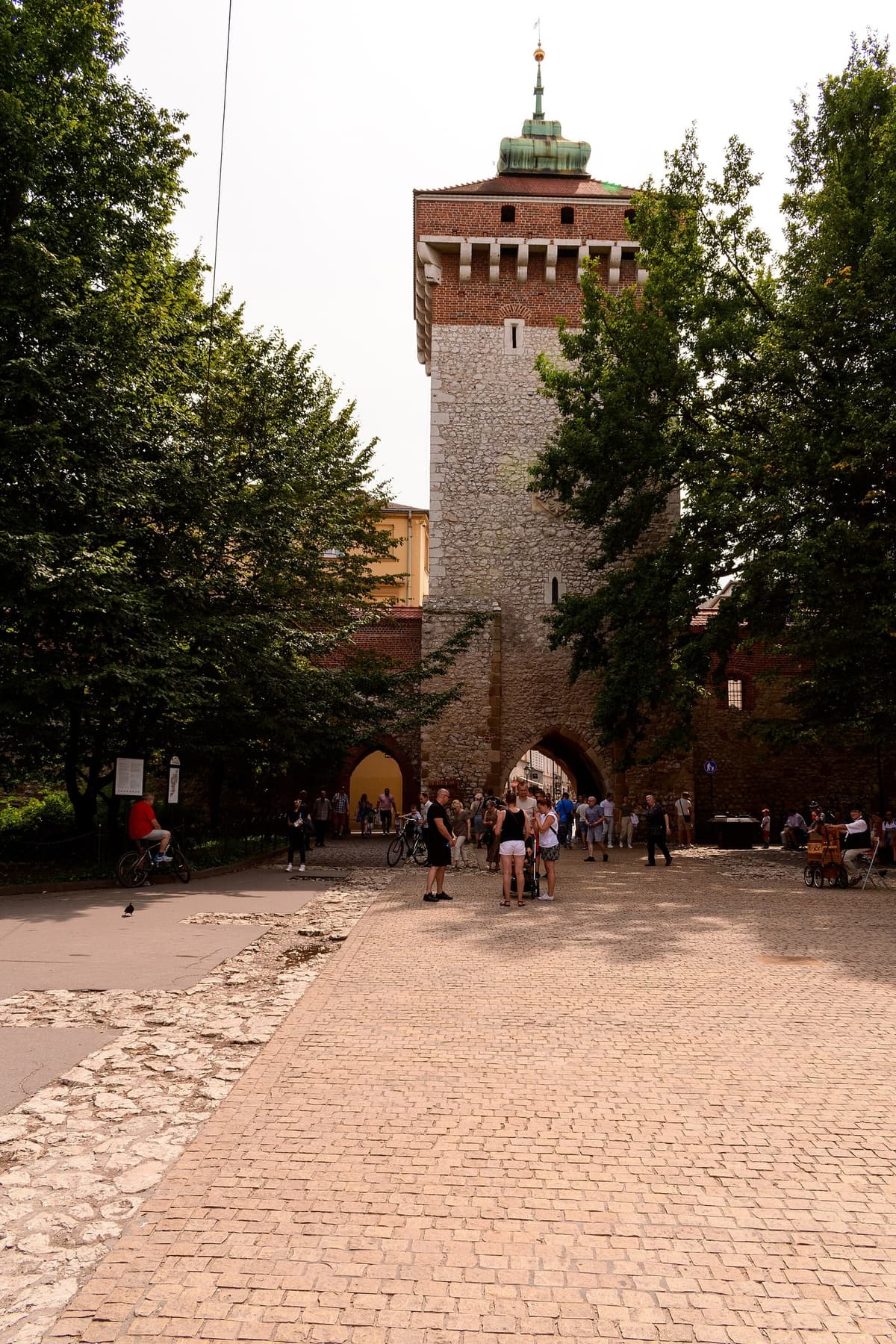
St Florian's Gate (Brama Floriańska) is first mentioned in 1307 and takes its name from St Florian's church in Kleparz. It was the main one of the seven gates in the city walls, and its tower is 34.5 m high.
On the outer side is a relief of the Piast eagle, made in 1882 to a design by Jan Matejko. On the town side a niche of about 1760 holds a figure of St Florian, and the vaulted passage has a small altar of Our Lady of the Sands, moved there in 1835. Upstairs is a chapel founded by the Czartoryski princes, with a neo-Gothic balcony on the town side designed by Karol Kremer in 1840.
The royal way ran from St Florian's church through the Barbican and the gate, along Floriańska, across the Main Square past St Mary's, then along Grodzka, Senacka and Kanonicza to Wawel. The Barbican was called the Gate of Glory (Porta Gloriae): a king who entered the town through it took power over the capital. The same line is walked today as the Royal Road.
The city walls, the towers and the Arsenal
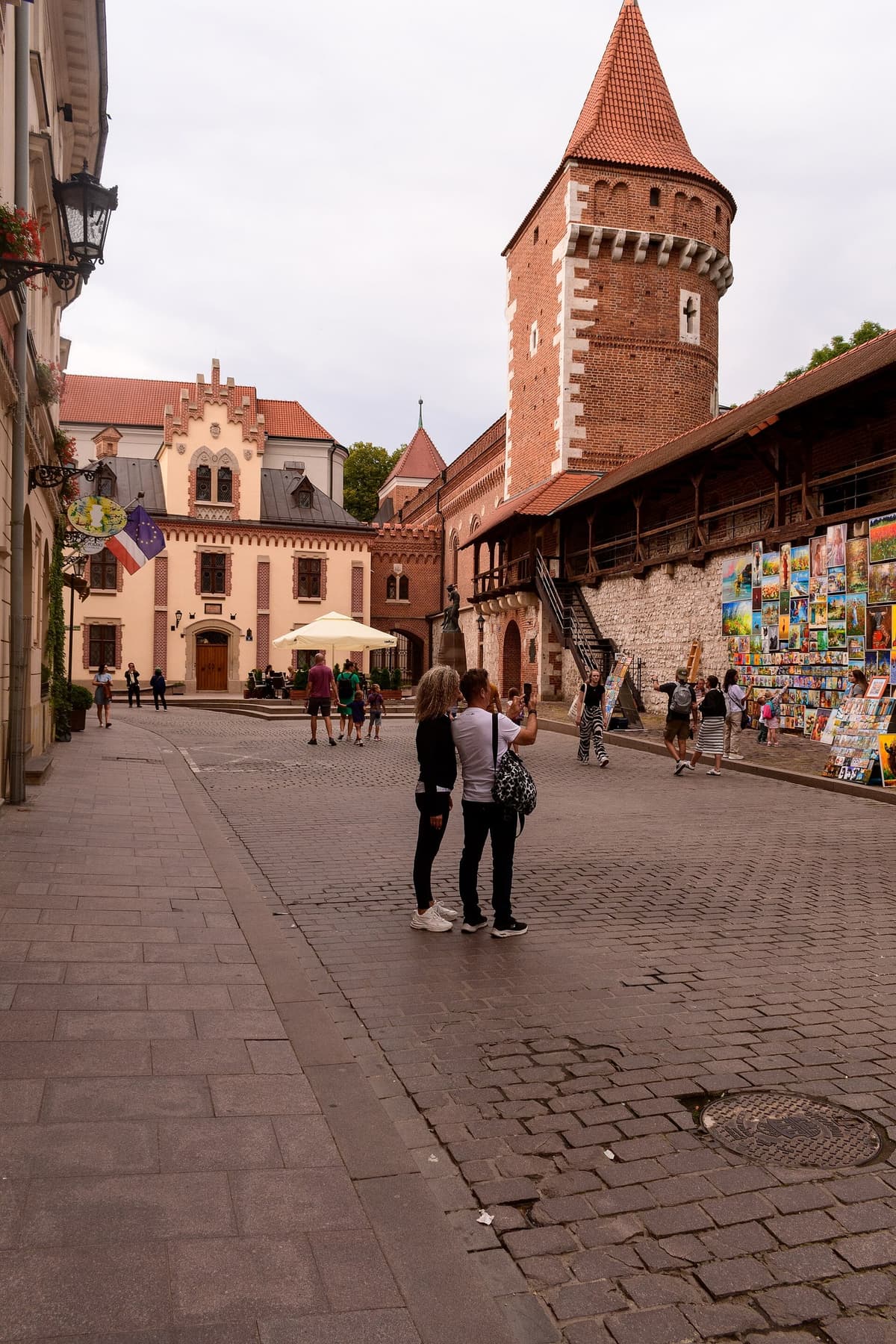
About 200 m of the medieval wall survive whole, with St Florian's Gate and three towers. From the Szpitalna end they are the Haberdashers' Tower (Baszta Pasamoników), the Joiners' Tower (Baszta Stolarska, also called Powroźnicza) and, by Sławkowska, the Carpenters' Tower (Baszta Ciesielska).
The furriers' guild had charge of the gate. The Haberdashers' Tower, over 31 m high, belonged to the haberdashers, who made trimmings for clothes, and before them to the shoemakers. The Carpenters' Tower guarded the city Arsenal and the nearby Piarist church.
The Arsenal was built in 1565–1566 between the Joiners' and the Carpenters' towers, founded by King Zygmunt II August and raised by the city architect Gabriel Słoński. It stored guns and cannon, with gunpowder in the cellars. Today it is a branch of the National Museum in Kraków, with a gallery of ancient art upstairs that holds pieces from the Czartoryski collection.
Why the walls went and the Planty came
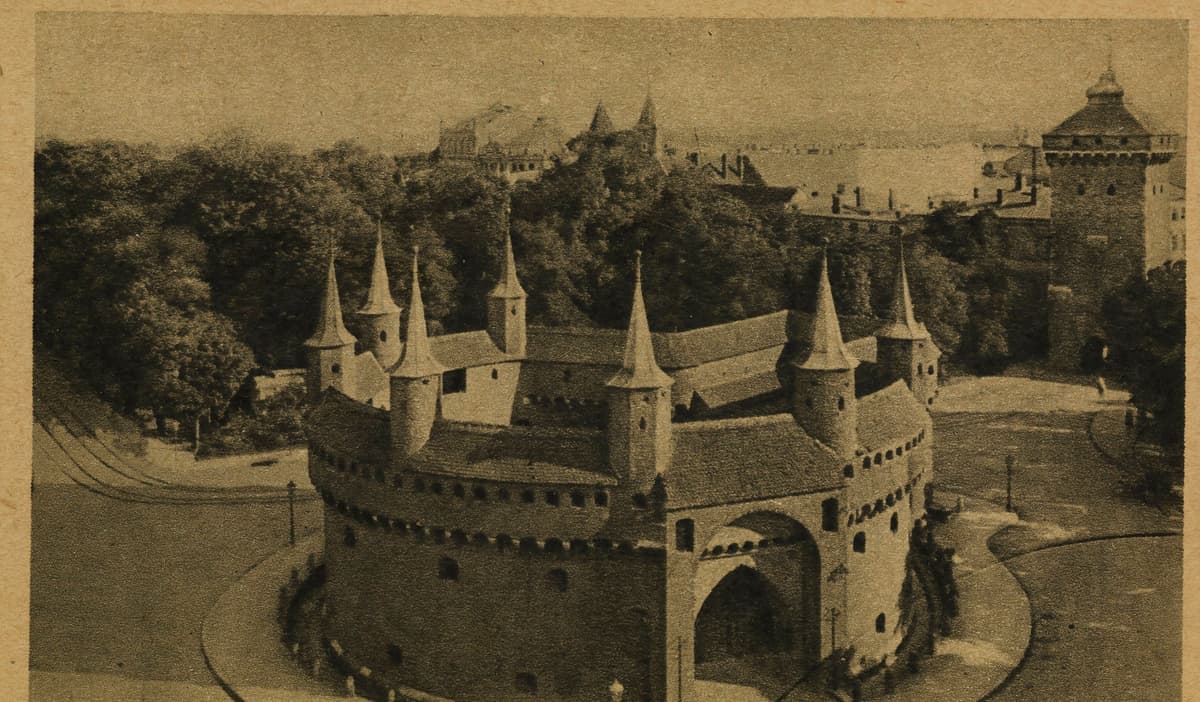
A decree of Emperor Francis II of 1806 ordered the city walls pulled down, and they were demolished in 1810–1814. Feliks Radwański saved the northern stretch with the Barbican in 1817, and from 1822 the Planty were laid out where the walls had stood.
1307
St Florian’s Gate is first mentioned.
1498–1499
The Barbican is built in front of the gate.
1565–1566
The city Arsenal is built between the Joiners’ and the Carpenters’ towers.
1587
Archduke Maximilian’s attack on the city is repelled.
1655
During the Swedish Deluge the Barbican’s garrison surrenders, out of ammunition and food.
1768
The Barbican serves the Bar Confederates in their fight against the Russian army.
1806
An emperor’s decree orders the city walls pulled down.
1810–1814
The walls are demolished.
1817
Feliks Radwański saves the northern stretch with the Barbican.
1822
The Planty are laid out where the walls stood.
1827
The neck between the Barbican and the gate is pulled down.
Frequently asked questions
What is a barbican?
A barbican is a medieval outwork that guards the way to a gate or a bridge of a town or a castle. Kraków's, built in 1498–1499, stands in front of St Florian's Gate, to which a neck once joined it. Its 130 loopholes were made for hand-held firearms.
Can you visit the Barbican in winter?
No. The Barbican and the city walls open to visitors for a season, from May to October, Tuesday to Sunday, and are closed outside it. The gate and the outside of the Barbican and the wall stand on public streets and in the Planty.
Is there one ticket for the Barbican and the walls?
Yes. The joint ticket costs PLN 22, reduced PLN 16, and covers both. A visitor who has seen one may see the other within three days of the date on the ticket, on the days both are open. There is no free day.
Why is it called St Florian’s Gate?
The gate takes its name from St Florian's church in Kleparz, where the royal way into the town began. It is first mentioned in 1307, and a figure of St Florian stands in a niche of about 1760 on its town side.
How long does a visit to the Barbican and the walls take?
A guided visit of both takes about 60 minutes. The last entry is 30 minutes before closing. The Barbican is 8 min on foot from the middle of the Main Square.