Wawel Cathedral
Katedra Wawelska
Wawel Cathedral stands on Wawel Hill, 14 min on foot from the Main Square of Kraków Old Town. One ticket, sold by the cathedral, covers the cathedral, the Sigismund Bell, the royal tombs and the cathedral museums. Visitors enter from Monday to Saturday from 9:00 and on Sundays from 12:30.
Updated
Key facts
- Ticket
- PLN 26Reduced PLN 18; free under 7
- April to October
- 9:00 to 17:00Monday to Saturday; Sundays and holidays 12:30 to 17:00
- November to March
- 9:00 to 16:00Monday to Saturday; Sundays and holidays 12:30 to 16:00
- One ticket covers
- Cathedral, bell, tombsAnd the two museums
- Tickets online
- bilety-wawel.plOr at the cathedral’s ticket office
- Time needed
- About 40 minThe cathedral and the Sigismund Bell
- From the Main Square
- 14 min on footTo the cathedral door
Tickets, hours and what the ticket covers
Visiting the cathedral
- April to October
- 9:00 to 17:00
- Monday to Saturday; Sundays and holidays 12:30 to 17:00
- November to March
- 9:00 to 16:00
- Monday to Saturday; Sundays and holidays 12:30 to 16:00
- Ticket
- PLN 26
- Reduced PLN 18
- Children
- Free under 7
One ticket covers the cathedral itself, the Sigismund Bell, the Royal Tombs, the Cathedral Museum and the Archdiocesan Museum at Kanonicza 19. The cathedral sells it itself: the castle’s tickets do not include it.
Tickets are sold at the cathedral’s ticket office, at a ticket machine and online at bilety-wawel.pl, the cathedral’s own shop. The machine sells full-price tickets only. The last tickets are sold, and the last visitors let in, 30 minutes before closing.
The reduced ticket is for pupils, students under 26, teachers and pensioners. When the Sigismund Bell, the Royal Tombs or the Cathedral Museum close for a time, the ticket stays valid for 7 days after they reopen.
The Cathedral Museum is closed on Sundays and on holidays, and the Archdiocesan Museum on Mondays.
- Cathedral doorThe way in, opposite the Vasa Gate.
- Cathedral ticket officeThe cathedral’s own ticket office on the hill.
- Vasa GateThe gate building between the cathedral and the castle.
- Herbowa GateThe gate at the top of the ramp from Kanonicza, 2 min on foot from the cathedral door.
The Sigismund Chapel
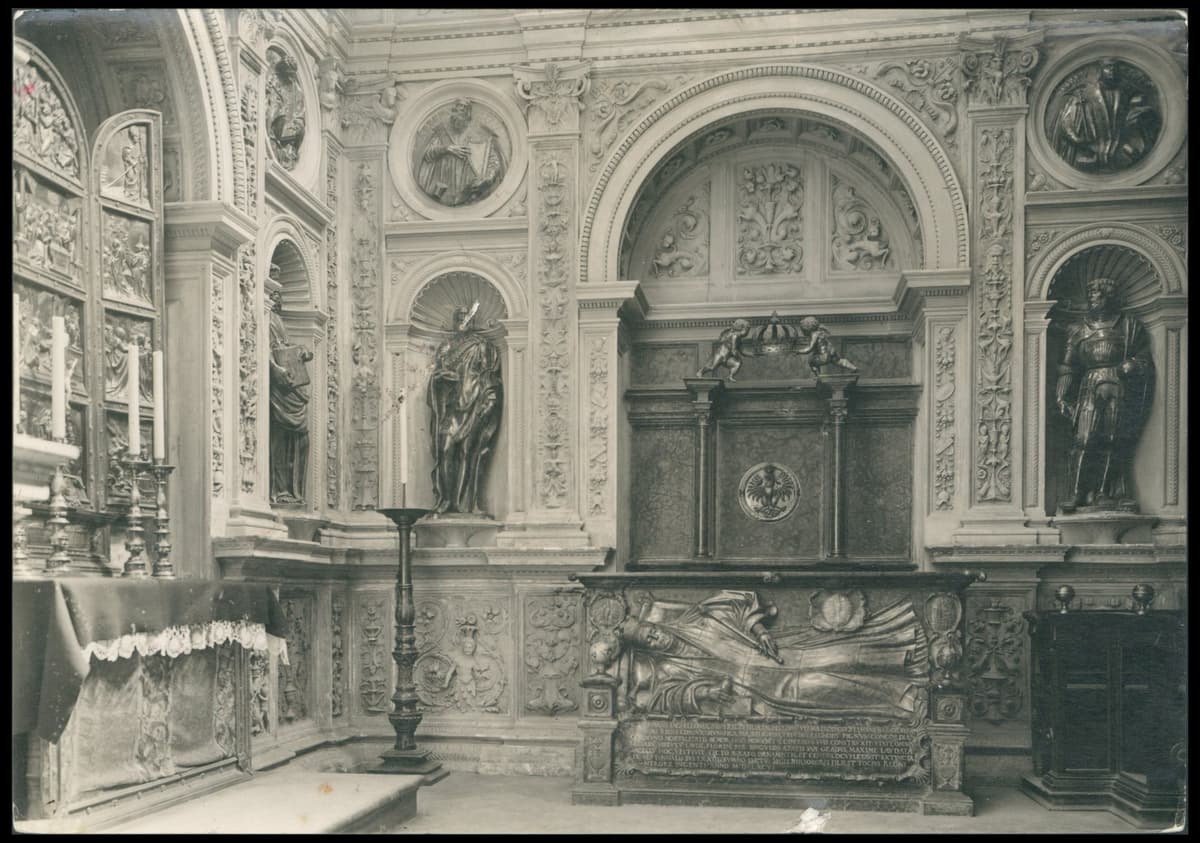
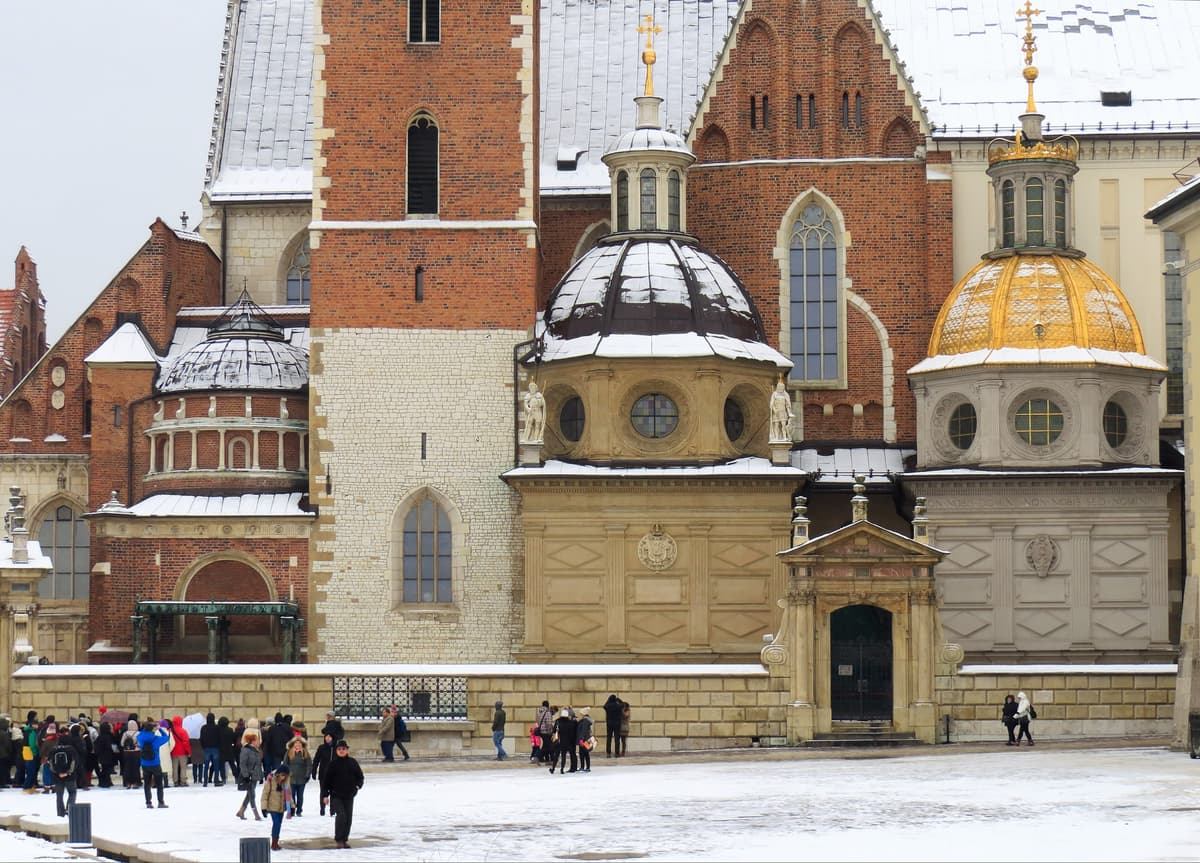
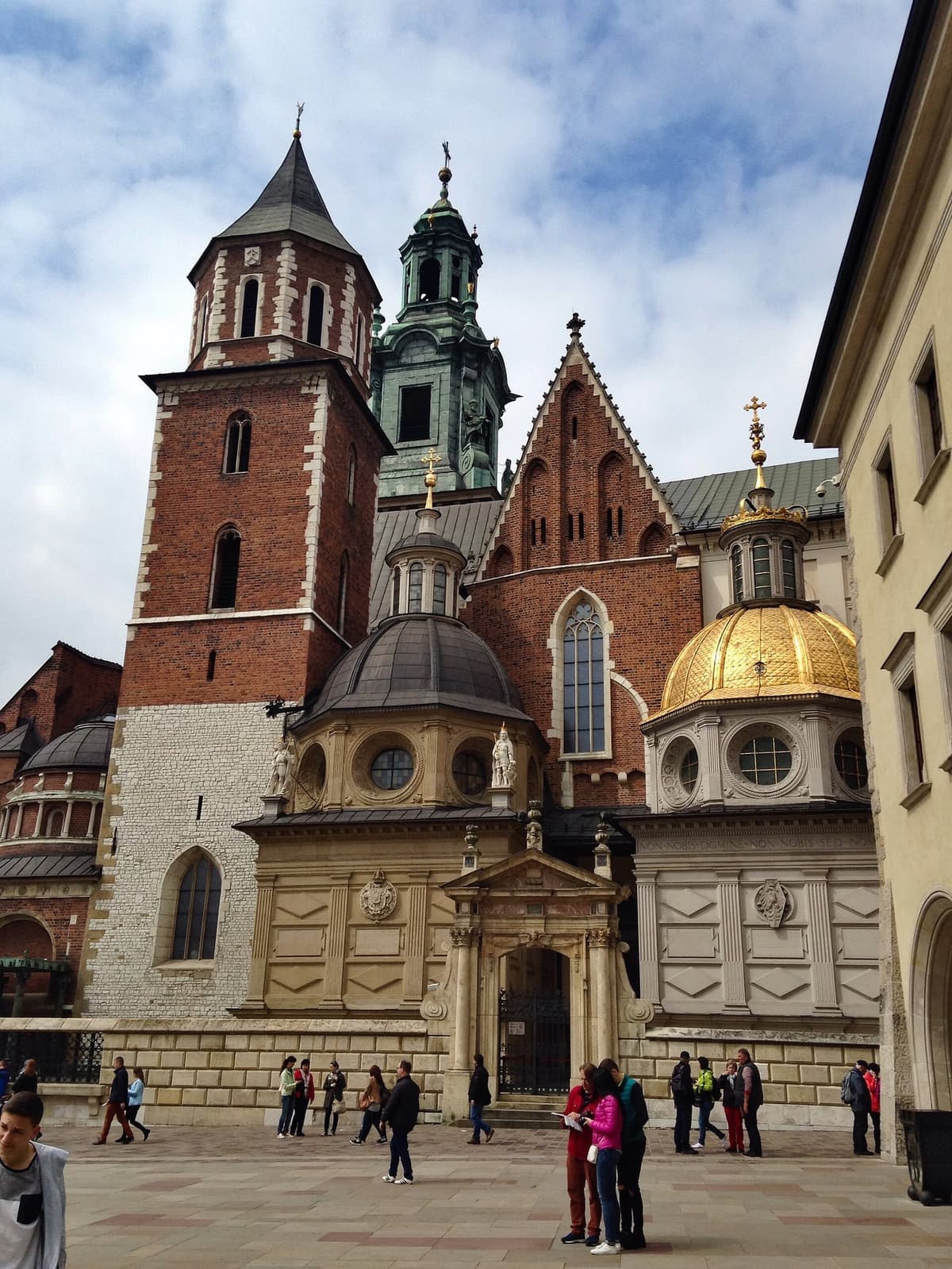
King Sigismund I the Old founded the chapel that bears his name. The Italian master Bartolomeo Berrecci designed it, and Italian sculptors built it in 1519–1533.
The first of the royal chapels built onto the cathedral, the Holy Cross Chapel, has painted decoration by Ruthenian painters and the tomb of King Casimir Jagiellon, carved by Veit Stoss.
The Sigismund Bell
- Across the mouth of the bell
- 242 cm
- Of bronze
- 9650 kg
- Ringers to swing it
- 12
- How far it is heard
- 30 km
Hans Behem, a bell-founder from Nuremberg, cast the bell in Kraków in 1520, and King Sigismund I the Old paid for it. The people of Kraków first heard it on 13 July 1521. With its oak yoke and fittings it weighs 12,600 kg, and it takes twelve ringers working together to swing it. A ringing lasts 6 minutes.
The bell rings on the great church feasts and national holidays, among them 3 May and 11 November. Its clapper cracked for the fourth time at Christmas 2000, and a new one has rung since 14 April 2001.
It hangs in the Sigismund Tower, a defensive tower made into a belfry in the 15th century and raised in the 16th, when the great bell was made.
The royal tombs and crypts
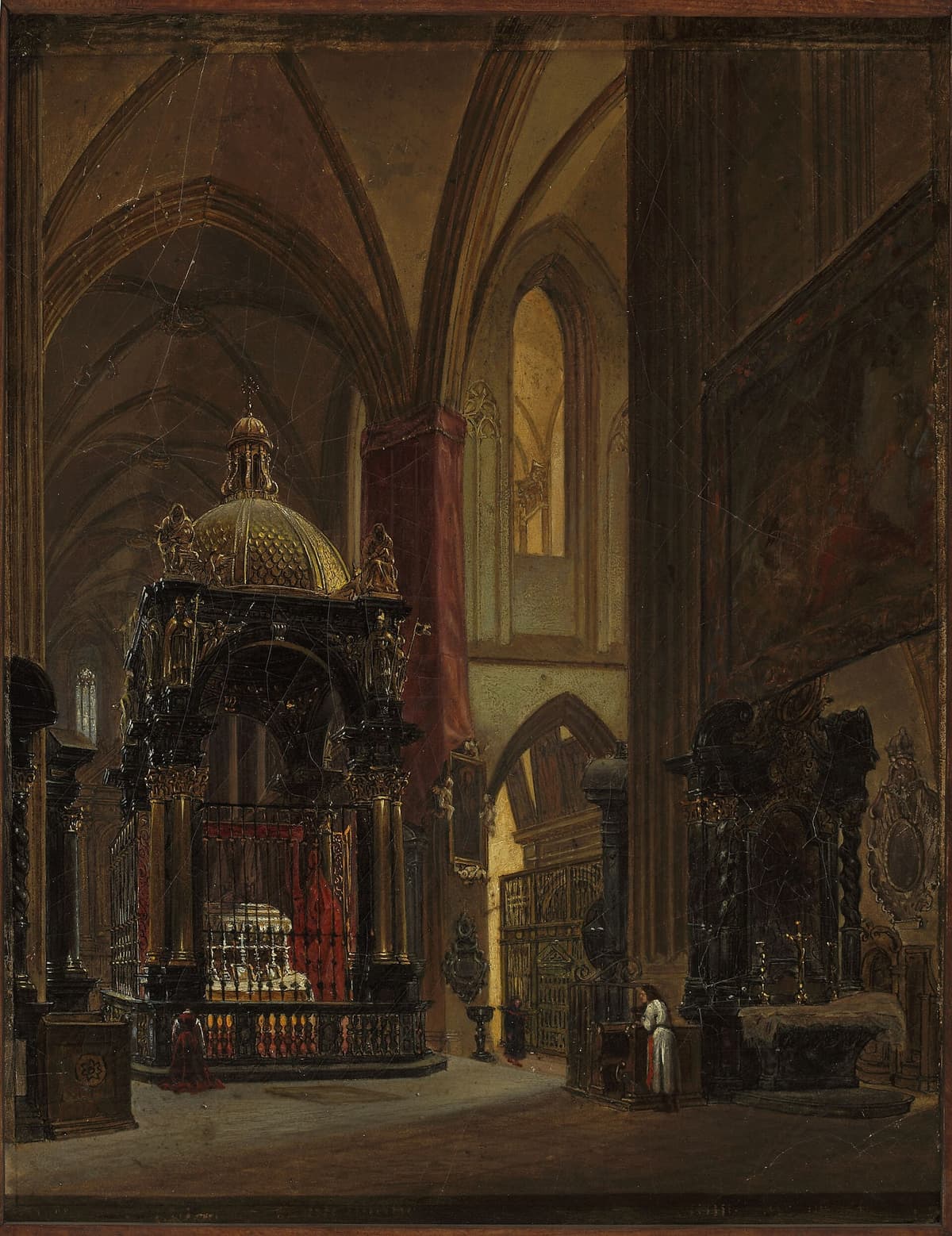
From Władysław Łokietek on 20 January 1320 to 17 January 1734, Polish kings were crowned in the cathedral, all of them but two. Łokietek was also the first king buried on Wawel, and from Casimir Jagiellon onwards the kings were buried in chapels of their own built onto the cathedral.
The cathedral keeps the tomb monuments of medieval kings, among them Władysław Łokietek, Casimir the Great, Władysław Jagiełło, Casimir Jagiellon, Jan Olbracht and Władysław Warneńczyk. King Sigismund I the Old and the kings after him lie with their families in the crypts under the cathedral, among them the sarcophagi of Sigismund Augustus, Stefan Batory and Sigismund III and the gilded copper coffins of Władysław IV and his wife Cecilia Renata.
The last royal tomb monuments, of Michał Korybut Wiśniowiecki and Jan III Sobieski, were raised in the middle of the 18th century.
Since the funerals of Józef Poniatowski in 1817 and Tadeusz Kościuszko in 1818, the cathedral has also been a national pantheon. Józef Poniatowski, Tadeusz Kościuszko and Władysław Sikorski lie in the Romanesque crypt of St Leonard. Józef Piłsudski’s mausoleum has been in the crypt under the Silver Bells Tower since 1936, and Lech and Maria Kaczyński were buried in the same crypt on 18 April 2010.
The poets Adam Mickiewicz, brought here in 1890, and Juliusz Słowacki, laid beside him in 1927, lie in the Crypt of the National Poets. The relics of St Jadwiga, canonised on 8 June 1997, rest in a bronze casket in the altar of the Crucified Christ.
The Cathedral Museum
The John Paul II Cathedral Museum stands on the hill between the Vasa Gate and the former seminary, in a building joined from two houses of the 14th century. Cardinal Karol Wojtyła, later Pope John Paul II, opened it on 28 September 1978.
Among its exhibits is the spear of St Maurice, which Emperor Otto III gave to Bolesław the Brave in 1000. Wojtyła had said his first Mass as a priest in the crypt of St Leonard, on 2 November 1946.
The same ticket covers the Archdiocesan Museum, at Kanonicza 19.
Rules, photos and the audio guide
Dress and silence
Visitors keep quiet, switch off or silence their phones and cover their shoulders and backs. Men take off their hats.
No sightseeing during services
Sightseeing stops while a service is held. On Sundays and holidays Mass is said in the morning, one of them in Latin, and visiting begins at 12:30.
No food, drink or calls
Eating, drinking, chewing gum, smoking, e-cigarettes included, and phone calls are not allowed.
Photos for your own use
Amateur photos and films are allowed without extra lighting or flash, tripods, selfie sticks or gimbals, for your own use and not for publication.
No selfies
Only the exhibits, the objects and the interior may be photographed: no people at prayer, no selfies and no group or posed photos.
Audio guide
An audio guide can be hired for a fee, in eleven languages. It takes about 40 min for the cathedral with the Sigismund Bell, about 10 min for the Royal Tombs and about 20 min for the Cathedral Museum.
The cathedral in brief
1000
The bishopric of Kraków is founded, and the first cathedral on Wawel is probably built soon after.
1142
A new, Romanesque cathedral is consecrated.
20 January 1320
Władysław Łokietek is crowned; from him on, the kings of Poland are crowned in the cathedral.
28 March 1364
The present cathedral is consecrated.
1519–1533
The Sigismund Chapel is built.
1520
The Sigismund Bell is cast.
17 January 1734
The last coronation, of Augustus III and Maria Josepha.
1817
Józef Poniatowski’s funeral: the cathedral begins to serve as a national pantheon.
28 September 1978
The Cathedral Museum opens.
Frequently asked questions
Is Wawel Cathedral free to enter?
No. Visitors need a ticket, which costs PLN 26 (reduced PLN 18) and covers the cathedral, the Sigismund Bell, the Royal Tombs and the two museums. Children under 7 enter free. The cathedral sells its tickets itself, at its ticket office, at a machine and at bilety-wawel.pl.
Who is buried in Wawel Cathedral?
Kings from Władysław Łokietek on, in chapels of their own and in the crypts, among them Sigismund I the Old, Sigismund Augustus, Stefan Batory and Sigismund III. National heroes lie there too: Józef Poniatowski, Tadeusz Kościuszko, Władysław Sikorski and Józef Piłsudski, the poets Adam Mickiewicz and Juliusz Słowacki, and Lech and Maria Kaczyński.
When does the Sigismund Bell ring?
On the great church feasts and national holidays, among them 3 May and 11 November. It takes twelve ringers to swing it by hand, and a ringing lasts 6 minutes. It can be heard up to 30 km away.
Can you take photos inside Wawel Cathedral?
Yes, for your own use, without flash or extra lighting, tripods, selfie sticks or gimbals. Only the exhibits and the interior may be photographed: no people at prayer, no selfies and no group or posed photos. The photos may not be published.
How long does a visit to Wawel Cathedral take?
The audio guide takes about 40 min for the cathedral with the Sigismund Bell, about 10 min for the Royal Tombs and about 20 min for the Cathedral Museum. The last visitors are let in 30 minutes before closing.